
Chronic Stress & Burnout: Who Should You See?
Photo by Anne Nygård on Unsplash
Contents
Why a Mind-Body Approach Matters
Understanding Chronic Stress: The Mechanism Behind It
Burnout: A Systemic Collapse (Not a Single Diagnosis)
Who Should You See for Burnout? A Multi-Layered Answer
Three Common Stress Response Patterns
Why a Mind-Body Approach Matters
Burnout never manifests in exactly the same way from one person to another. Some people collapse after a period of intense overactivity, others slowly wear themselves down in a state of diffuse stress, while others become stuck, without energy or motivation.
The causes themselves are just as varied: professional pressure, mental patterns, physiological imbalances, living environment, or a combination of several factors. This is what makes burnout difficult to understand… and sometimes difficult to manage.
Today, most approaches offer targeted solutions: psychological, medical, or behavioural. But they often share one common starting point: treating symptoms rather than mapping all the contributing causes and understanding the person’s overall functioning.
Some traditional approaches — such as Ayurveda, Chinese medicine, or certain forms of naturopathy — offer a different perspective: they seek to understand the system as a whole rather than focusing on an isolated symptom.
Ayurveda in particular considers that:
- each individual responds differently to stress
- each burnout has its own combination of causes
- recovery requires a global understanding of these factors
Rather than asking “which symptom should be treated?”, it asks another question: “why did this system become imbalanced — and how?”
Where to Start? Understanding Your Burnout Profile
Before going further, you can begin by identifying your own way of responding to stress and your burnout risk factors.
Complete online burnout test: assess your level of exhaustion, identify your risk factors, and understand your dominant imbalance profile.
In this article, we will explore:
- what happens during chronic stress and burnout
- why conventional approaches sometimes reach their limits
- how people respond differently to stress
- and how an Ayurvedic approach may support more sustainable recovery
Understanding Chronic Stress: The Mechanism Behind It
What Is Chronic Stress?
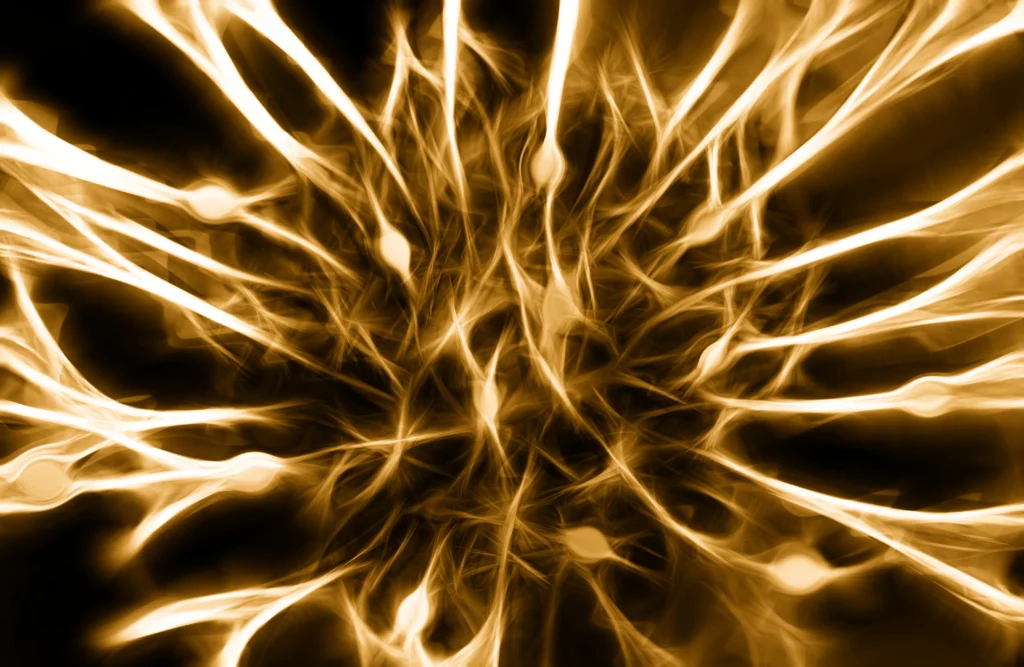
Burnout does not happen “all at once”. It is usually the result of a more subtle and progressive process: the development of chronic stress. This occurs when the body’s stress response system remains activated for longer than it was designed to.
Instead of returning to balance after temporary pressure, the body stays in a prolonged state of alert. Research associates this with:
- prolonged elevation of cortisol
- heightened vigilance
- progressive disruption of the body’s regulatory mechanisms
Over time, this continuous activation erodes both mental clarity and physical resilience.
A Global Impact on the Body
Chronic stress affects many physiological processes:
- hormonal balance
- digestion
- immunity
- sleep
- cognitive functions
- metabolism
In other words, it does not affect only one aspect of health — it disrupts the entire system. This is why acting only on symptoms, or only on the psychological dimension, is rarely sufficient in the long term.
Identifying the Underlying Causes: An Essential (and Often Overlooked) Step

If we truly want to understand and resolve burnout, one question becomes central: what is maintaining this stress over time?
Contrary to common belief, chronic stress does not come only from work or visible external pressures. Its causes may be:
- external: environment, workload, relationships
- conscious internal factors: beliefs, expectations, mental pressure
- unconscious internal factors: physiological imbalances, inflammation, digestive disturbances, hormonal dysregulation
This last point is often overlooked: the body itself can generate a chronic stress state, even without an obvious psychological cause.
In this context, acting only on symptoms may provide temporary relief without changing what maintains the deeper imbalance. If the causes of chronic stress are not identified and addressed, the system tends to return to dysfunction.
This is why the central question is not only “how can I feel better?”, but “what is keeping this state of alert active over time?”
When Chronic Stress Becomes Persistent
When this state continues over time, it gradually becomes embedded in daily life, sometimes subtly. Fatigue becomes more present, sleep less restorative, digestion more sensitive, concentration more unstable…
These manifestations are often perceived as isolated problems or simply “a difficult period”. Yet most often, they reflect a deeper reality: a system functioning permanently in compensation mode.
As long as this mechanism persists, the organism continues compensating. It mobilises resources, adapts, and maintains a certain level of functioning. But this adaptation comes at a cost.
Gradually, recovery capacity decreases, tolerance to stress diminishes, and balance becomes more fragile. This is not yet collapse, but the terrain is changing profoundly.
Burnout appears precisely when this adaptive capacity reaches its limits. It is therefore not simply “more intense stress”, but a change of stage: the moment when a system that is already weakened can no longer compensate
Burnout: A Systemic Collapse (Not a Single Diagnosis)
What Is Burnout? A Multifactorial State of Exhaustion

Unlike conditions such as depression or anxiety, burnout does not have one universally accepted medical definition. Depending on the country and framework used, it may be considered a work-related syndrome, a form of exhaustion, or may not be medically defined at all.
This is why there is now a wide variety of tools, tests, and definitions attempting to measure or characterise burnout. This can sometimes create confusion or contradictions.
Faced with this diversity, research generally relies on a set of recurring manifestations to describe burnout. These are not limited to one dimension: they may be physical, emotional, cognitive, behavioural, or motivational.
Among the most common manifestations are:
- profound physical and mental exhaustion
- reduced energy and motivation
- emotional detachment or hypersensitivity
- concentration and memory difficulties
- sleep disturbances
- reduced stress tolerance
None of these manifestations alone is enough to define burnout.
It is their combination, intensity, and impact on daily functioning that make it recognisable.
Burnout can be understood as a shift in the dynamics of stress.
It most often develops on a background of chronic stress, when one or several additional events — overload, emotional shock, or difficult circumstances — push the system beyond its limits.
This is the moment when already weakened adaptive capacities are no longer sufficient.
Nuance: Burnout, Boreout… Similar Realities?
Burnout is generally defined as a consequence of prolonged chronic stress. However, some approaches also describe states of exhaustion linked to lack of stimulation or meaning, sometimes referred to as “boreout”.
Even if the mechanisms differ, the effects can overlap: fatigue, loss of energy, disengagement.
These distinctions mainly highlight one thing: exhaustion can take different forms — and requires a personalised approach.
Why a Single Definition Is Not Necessary in Ayurveda
In this context, trying to fit one’s experience into a single definition can sometimes be limiting. What matters most is not applying a precise label, but understanding:
- how the system became imbalanced
- which causes are involved
- and how this imbalance manifests concretely in the individual
This is precisely where the Ayurvedic approach differs. Like other global traditional approaches, it does not rely on a standardised diagnosis, but on observation of lived experience. It seeks to understand the logic of the imbalance rather than fitting it into a predefined category.
Understanding Your Situation in Practical Terms
If definitions of burnout remain unclear, it may be more useful to begin from your own experience.
Where are you currently in terms of fatigue? What are your main stress factors? Which imbalances seem most dominant?
Take the test: assess your level of burnout, your risk factors, and your dominant imbalances.
Who Should You See for Burnout? A Multi-Layered Answer
When facing burnout, the question “who should I see?” does not have a single answer. It depends both on the situation itself, the underlying causes involved, and the manifestations present.
In all cases, the first step remains medical.
Seeing a doctor helps assess the overall situation, rule out other conditions that may present similarly (such as depression or anxiety disorders), and ensure that no underlying pathology requires specific treatment.
After that, the appropriate support depends largely on the causes identified.
- If the issue is work-related (overload, conflict, unsuitable conditions), occupational health professionals, HR departments, or even legal support may also be relevant.
- If psychological factors are central (internal pressure, thought patterns, emotional experiences), psychological support may be extremely helpful.
- If the manifestations are mainly physical (persistent fatigue, digestive disturbances, disrupted sleep), medical follow-up or body-based supportive approaches may be needed.
Each approach addresses part of the problem. That is both its strength… and its limitation.
When a Global Approach Becomes Necessary
Most of these interventions focus on one specific aspect — a cause, a symptom, or a context.
- psychological symptoms → psychologist or psychiatrist
- digestive issues → gastroenterologist
- hormonal changes → endocrinologist
- etc.
These approaches are often relevant, and sometimes essential. But they do not always take the whole system into account. Yet the physical, mental, and environmental dimensions are deeply interconnected.
When the causes are multiple, diffuse, or difficult to identify — or when several dimensions are affected simultaneously — a more global approach may become necessary.
This is where traditional approaches come in — such as Ayurveda, Traditional Chinese Medicine, or certain forms of naturopathy.
Rather than starting from a symptom or a category, these approaches seek to understand:
- how the imbalance developed
- what causes are involved
- and how it manifests in the individual
The goal is not to replace other approaches, but to complement them by offering a broader understanding of the situation.
Even with the Right Approach, Standardised Responses Remain Limited
Even when the causes are identified and the right types of support are chosen, another reality comes into play: not everyone responds in the same way.
In similar situations, some people develop anxiety and agitation, others become hyper-controlled and overinvested, while others experience profound slowing down and loss of momentum.
In other words, burnout does not manifest uniformly. Its expression depends on the causes that triggered it, but also on the person’s “terrain” — their physical and mental constitution, their resources, and the way their system responds to stress.
This is precisely what complementary traditional approaches take into account. They do not simply seek to treat a symptom, but to understand how it fits into the person’s overall functioning.
The objective is to adapt the support to the individual, not to offer a standardised solution.
This difference in “terrain” explains why two people exposed to a similar level of stress may evolve very differently. Ayurveda notably describes several broad tendencies in the way the system responds to chronic stress.
Three Common Stress Response Patterns
Even when exposed to similar stressors, we do not all respond in the same way. Some people become restless, others intensify their effort, while others slow down or shut down.
These differences matter: they influence both how burnout develops… and how it may best be supported. Ayurveda commonly describes three major patterns.
1. The “Agitation” Pattern — When the System Gets Disorganised
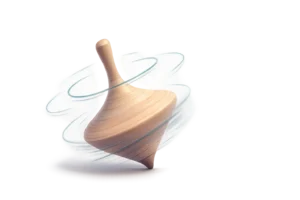
This occurs when the system tries to respond to stress but lacks stability or sufficient resources.
The mind accelerates, thoughts race, sleep becomes lighter, digestion more irregular. One may feel anxious, scattered, and quickly exhausted.
2. The “Overactivation” Pattern — Pushing Through at All Costs
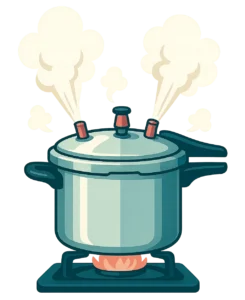
This occurs when the system responds to stress with excessive drive and significant energy reserves.
The person keeps going, keeps pushing, sometimes far beyond their limits. Irritability increases, as does pressure.
This response may be effective in the short term… but difficult to sustain over time.
3. The “Slowing Down” Pattern — When Everything Becomes Heavier

Momentum decreases, motivation drops, and both body and mind seem to slow down.
One may feel stuck, fatigued, with a tendency to withdraw or avoid. Here, the system is no longer able to mobilise its resources effectively.
Most people move between several of these patterns. But identifying the dominant one often helps clarify what is happening — and orient the support accordingly. This is precisely what the test mentioned earlier aims to do: highlight your dominant response profile.
What Does a Global Approach to Burnout Look Like?
In burnout, the system as a whole is affected: energy, recovery, digestion, sleep, emotional regulation.
A global approach therefore does not seek to “fix” one isolated symptom, but to support the system in rebuilding itself. This type of approach does not replace other forms of support. Rather, it complements them by offering a broader understanding and by working on underlying causes.
In the Ayurvedic approach — as in other holistic health traditions — this generally involves three major stages.
1. Identifying and Reducing What Creates Imbalance
Before trying to “repair” the system, it is necessary to understand what maintains the state of exhaustion: stress factors, physiological imbalances, habits, environment.
Without this, improvements often remain temporary.
2. Stabilising and Regulating the System
Once the main sources of imbalance have been identified, the objective becomes restoring healthier functioning:
- more regular rhythms
- calming the nervous system
- supporting sleep and digestion
The person needs to regain a stable foundation before deeper recovery can truly occur.
3. Gradually Rebuilding Resources
Once the system becomes more stable, recovery can begin:
- regaining energy
- rebuilding adaptive capacity
This is a gradual process that requires both time and consistency.
Burnout: Who Should You See?
There is no single answer.
Some situations require medical care. Others call for psychological, professional, or legal support. But when the causes are multiple, or when the overall functioning of the system is affected, it becomes essential to adopt a broader perspective.
This makes it possible to:
- connect symptoms together
- identify deeper causes
- and adapt the support to the individual
It is within this framework that global approaches such as Ayurveda can offer genuine value.
Ready to Better Understand Your Own Response to Stress?
Before going further, you can already begin identifying:
- your level of exhaustion
- your dominant risk factors
- and your stress response profile
Or, if you would like support: