
Learn how to recognise your Ayurvedic constitution and identify signs of imbalance.
Doshas in Ayurveda: the Qualities That Shape Your Balance
- Date created:12 May 2026
- Last modified:15 September 2026
Contents
What are the Doshas?

The Doshas are among the central concepts of Ayurveda — and also among the concepts that can be most difficult to translate into modern language. They are not personality labels, nor fixed “body types,” nor mystical concepts.
- One way I find useful to approach the Doshas is to understand them as abstractions to understand living systems.
- Another is as clusters of observable qualities that occur together.
These two perspectives are closely related.
The first asks:
What are Doshas?
The second asks:
How do we know them?
Although this work uses examples from physiology, the three Doshas are not limited to the human body. They can also be used for recognising patterns in life and nature — from times of day and the seasons to processes occurring throughout the universe.
Two ways of understanding the Doshas
1. The Doshas as interpretive categories
In classical Ayurvedic physiology, Vāta, Pitta, and Kapha are entities that govern the processes of the organism. They are described through their functions, locations, and other characteristics. Yet the classical texts do not provide a concise definition of the kind we might expect from a dictionary. What follows is therefore my own extrapolation of this classical framework.
All living beings have to perform certain basic functions to remain alive. For instance, they move, transform nutrients, maintain internal balance, grow, communicate, and repair themselves.
These processes are all different. Yet they can also be grouped according to broader patterns of functional activity. The following table presents one way of interpreting these patterns through the three Doshas:
|
Physical functions
|
Psychological functions
|
Shared pattern
|
Dosha
|
|---|---|---|---|
The point is not that breathing, thinking, or circulation are themselves Vāta, for example. Rather, they are different physiological functions in which mobilisation and movement are prominent.
In the same way, digestion and understanding are very different processes, but both involve transformation: something is taken in (food, sensations) and processed into a changed state (nutrients, interpretations).
Growth, nourishment, lubrication, and the capacity to sustain and maintain structures involve predominantly cohesion and stability.
In this interpretation, Vāta, Pitta, and Kapha are therefore three broad abstractions. They provide interpretive categories to group the enormous variety of physiological activity according to three shared patterns of function: mobilisation, transformation, and cohesion.
2. The Doshas as clusters of qualities
Ayurveda uses qualities to describe things that we can preceive directly through our senses: whether something is dry or moist, light or heavy, hot or cold, mobile or stable, sharp or dull, and so on. If you wish to know more about how this language works, you can read the article on Ayurvedic Qualities and how to understand and use them.
The classical texts attribute particular qualities to Vāta (dry, light, cold, unstable/mobile, rough, minute), Pitta (hot, sharp, flowing/spreading, unctuous, light), and Kapha (cold, heavy, dull, unctuous, smooth, stable). But there is more going on than simply learning three lists of qualities. When we observe life, we find that these qualities naturally tend to group together and reinforce one another, forming recognisable clusters.
Consider three simple examples.
Vata pattern
As we age, the body gradually becomes drier.
As tissues lose moisture and mass, we become thinner and lighter.
With this comes also a progressive instability of body systems and functions, for example a more fragile skin, a less reliable memory, or a weaker metabolism.
A weaker metabolism will make our skin colder.
Dryness, lightness, coldness, and instability tend to occur together. They form a recognisable cluster associated with Vāta.
Pitta pattern
When we lie in the sun, heat enters the body.
It penetrates the tissues, quickly raising internal temperature.
The body responds through processes of transformation and regulation: blood flow increases toward the surface and fluid is released as sweat.
Heat, penetration (sharpness), and fluidity tend to occur together. They form a recognisable cluster associated with Pitta.
Kapha pattern
When it’s cold and damp outside, the nose produces more moisture and mucus.
As more mucus is produced, its clearence can get slower, allowing it to accumulate.
Accumulation of mucus can then create a sensation of heaviness, fullness and congestion.
Cold, heavy, slow, moist tend to occur together. They form a recognisable cluster associated with Kapha.
These examples illustrate something important. Qualities can be isolated descriptors. But clusters of certain qualities that regularly occur together provide the evidence through which we recognise, or infer, the functional patterns described earlier.
This is what I mean here when I speak of the Doshas as clusters of qualities. The examples above are only three among many. We could equally look at autumn, digestion, springtime, exercise, fever, tissue growth, or many other processes and observe similar associations of the same clusters of qualities.
We cannot identify something as Kapha simply because it is heavy. An object or process may be heavy without being particularly moist, cold, slow, or stable. It is through a cluster of qualities that a Dosha becomes knowable.
Bridging the two views
A dosha can become knowable through clusters of qualities, but it is not identical to the cluster of qualities. This makes their relationship more interesting.
Functional interpretation
In the functional interpretation developed here, the Doshas identify broad patterns of physiological and psychological activity.
Consider this. If I ask which functional pattern predominates in digestion, the answer is relatively straightforward. Food is broken down, assimilated and metabolised. From the functional perspective, transformation is therefore prominent.
- Functional interpretation: digestion is, in this sense, a Pitta-dominant function.
Qualitative observation
Qualities describe the perceptible character of phenomena. However, if I try to identify the dominant functional pattern of digestion through qualities alone, I may be hard pressed.
Ordinary healthy digestion may have no particularly conspicuous qualitative character from the point of view of the observer. The process just happens, without us even noticing.
- Qualitative characterisation: unclear. It is hard to describe healthy digestion through a cluster of qualities.
This raises the deeper question: why should then the functional pattern of transformation be associated with hot, sharp, fluid qualities?
One way of answering this is through the traditional elemental model: Pitta is associated with tejas (fire) and āpas (water), and its qualities follow from that association.
Another possibility is to approach the relationship functionally. Increased digestive activity may be experienced as burning sensations; it may become sharp, irritate or damage tissues when it exceeds its appropriate domain; and digestive fluids may become excessive or appear where they should not, as in acid reflux.
While healhy digestion may have no noticeable qualities, when the process becomes particularly intense, the cluster of qualities associated with Pitta becomes much more apparent. In this interpretation, recurring clusters of qualities are signatures of a functional pattern — especially when that pattern becomes unusually conspicuous.
The same reasoning applies to Vāta and Kapha. With this distinction in mind, we can now turn to the Doshas in human beings.
The Doshas in human beings

Individual constitution (prakriti)
Ayurveda considers that each person has a characteristic, stable configuration of Vāta (mobilisation), Pitta (transformation and regulation), and Kapha (cohesion and stability), established from conception. This is called prakṛti, or constitution.
In this sense, prakṛti describes the baseline relative expression of Vāta, Pitta and Kapha – within a healthy range.
This does not mean that people can be neatly divided into fixed types. Two people with a relative Vāta predominance, for example, will never be identical. Vāta Dosha will be expressed to different degrees, and in different structures or functions of the organism.
The value of prakṛti is therefore not primarily to assign a person to a category, but to establish a baseline: the characteristic way in which a person’s physiological functions tend to operate when in equilibrium.
For example, a person may naturally sleep relatively lightly: they have always slept around seven hours a night, which is enough for them to feel rested, and need a quiet environment to sleep well. From an Ayurvedic perspective, this may reflect a natural tendency towards a somewhat more easily mobilised or less deeply settled state during sleep. This state is not considered problematic: it is part of the person’s natural constitution and represents their normal state of equilibrium.
Imbalance over time (vikriti)
Over the course of life, an individual may progressively move away from their baseline pattern of functioning. Climate, diet, stress, sleep, aging, environment, and other factors can alter the pattern. This altered state is called vikṛti, or imbalance.
A new difficulty staying asleep, accompanied by agitation at night and tremors can be interpreted as an imbalance, when these features represent a departure from the person’s baseline.
A functional pattern can depart from its baseline in several ways: it can become disorganised, excessive or insufficient. These categories are not mutually exclusive.
- Disorganised: The functional pattern is present, but its distribution, coordination or character has become altered. For example, circulation becomes impaired in one foot, or motor reflex becomes absent in one leg.
- Excessive: The functional pattern is too intense or prominent. Returning to the earlier example of digestion, unusually intense hunger accompanied by burning sensations and acidity may indicate that transformation functions are in “overdrive”.
- Insufficient: The functional pattern is too slow or weak. For example, sensory activity may become unusually dulled, or growth processes unusually slow.
Vikṛti is any relevant departure from an individual’s baseline pattern of functioning.
Any Dosha can become imbalanced in any person under the right conditions. However, an individual may be more susceptible to imbalances involving their constitutionally dominant Doshas.
A note on psychology and emotions
In Ayurveda, many characteristics that modern western culture tends to interpret as purely “in the head”— anxiety, irritability, lethargy, impulsiveness, emotional reactivity — are not necessarily understood as purely mental phenomena. They are seen as expressions of broader functional states within the organism.
A system characterised by excessive movement and instability may become fearful. A system dominated by heat and intensity may become impatient, reactive or confrontational. A system marked by heaviness and stagnation may withdraw, resist change or lose momentum.
In Ayurveda, body and mind are therefore deeply continuous with one another, rather than fundamentally separate domains.
A note on interpretation
The purpose of the descriptions below is not to fix individuals into rigid types, but to make Doshas easier to recognise.
To that end, the following sections focus on prominent Dosha constitutional patterns and pronounced Dosha excess in imbalance. Dosha insufficiency is generally less salient and more difficult to assess, and is therefore consciously left out.
In real life, physiology rarely presents as a “pure” Vāta, Pitta, or Kapha pattern. Different patterns often coexist and overlap. The intention here, however, is to help you recognise characteristic clusters of qualities in the body and mind — hence the deliberately exaggerated examples.
You can find a self-assessment table here, if you wish to explore your own constitution or identify possible current imbalance patterns. Or, you can look in particular at how qualities can be used to describe constitutional and imbalance patterns, with this table.
Vata Dosha

Vāta is associated with functions of mobilisation, and can be identified through the qualities dry, light, cold, unstable/mobile, rough, minute. In a balanced state, this functional pattern contributes to liveliness, flexibility, and responsiveness. When Vāta becomes excessive or disturbed, it contributes to instability, depletion, and fragmentation of functions.
Structure (physical build)
A Vata-dominant person typically has a light, slender frame with narrow shoulders and hips, and often irregular proportions (very tall or very short, for instance). Asymmetries are not uncommon, such as one shoulder sitting slightly higher than the other, variations in posture, or uneven distribution of facial or bodily features.
Body weight is generally low, although it may fluctuate quickly even without major changes in diet. A relative lack of adipose and cushioning tissues gives the body a fine, delicate appearance, even when strength is present. As a result, anatomical structures such as joints, veins and tendons may appear more prominent under the skin, or areas such as the eyes, cheeks and chest may appear slightly sunken.
The skin tends to be thin, dry and cold. The pigmentation may be on the darker end of the spectrum usually observed within the person’s ethnic group of origin. The hair is often coarse and curly.
Functions (physiology and psychology)
In function, Vata expresses itself through variability. Energy tends to arrive in bursts: periods of enthusiasm, rapid productivity and stimulation are often followed by sudden fatigue or withdrawal.
Appetite and thirst follow a similar pattern. They may be strong at times and absent at others, rarely following a stable rhythm. This corresponds with irregular digestion and elimination, and a tendency to respond poorly to dry, light or astringent foods (such as pulses or cruciferous vegetables).
Sleep is typically light and easily disrupted, and may be shorter than average, particularly during periods of overstimulation. The nervous system tends to be highly sensitive to environmental input such as noise, or change.
Mentally, thought processes are fast and associative, often branching in multiple directions at once. This supports quick understanding (albeit sometimes wrong) and creative connection-making, but can also lead to fragmentation of attention.
Emotionally, responses tend to arise quickly and intensely, but may dissipate just as quickly. There is often sensitivity, curiosity and openness, alongside a tendency toward worry, anticipation and mental projection when stability is lacking.
A balanced Vata-dominant expression
Victoria moves quickly through her morning routine, often humming or speaking to herself, already mentally ahead of the day. There is a brightness in her presence. Conversations with her feel lively: she listens quickly, responds quickly, and often brings unexpected and original insights.
Her energy circulates quickly from one activity to another, and she tolerates changes, travel, and variable life rhythms well – as long as they are not excessive. She walks quickly, frequently changes posture, and recovers rapidly after exertion.
She enjoys warm weather and tends to struggle in colder seasons. She engages in many activities and interests, sometimes so absorbed that she forgets to eat or drink, or snacks without structured meals. She finds it easy to say yes to new experiences.
People describe her as creative, spontaneous and engaging, but also adaptable. Even when life becomes busy or unpredictable, she maintains a sense of curiosity and responsiveness rather than becoming overwhelmed.
A Vata-dominant imbalance
Vince feels as though his energy is constantly dispersing in multiple directions. He starts the day with many objectives but struggles to bring them to completion. His attention jumps rapidly from one thought to another, often without resolution.
His body feels depleted. He has begun skipping meals one day and overeating the next, and his digestion has become unsettled (gas, bloating, indigestion). He has also started losing weight and hair, has constipation, and notices that his skin has become so dry that it feels rough in places. Dark patches appear under his eyes.
His extremities are frequently cold, and he experiences persistent tension in the body.
Vince falls asleep relatively easily but wakes during the night, sometimes with his mind already active and racing. Thoughts feel loud and unstructured, often filled with worry about possibilities that may never occur. Even simple decisions can feel difficult, as if too many options are competing at once.
Emotionally, he feels exposed, as if there is not enough internal structure to hold his experience. Anxiety may arise suddenly, sometimes without a clear trigger, followed by fatigue or withdrawal. At times he feels disconnected from himself — still functioning outwardly, but internally unanchored.
To both distract himself and experience brief moments of stimulation, he has begun engaging in compulsive online shopping, though often without completing purchases.
Pitta Dosha
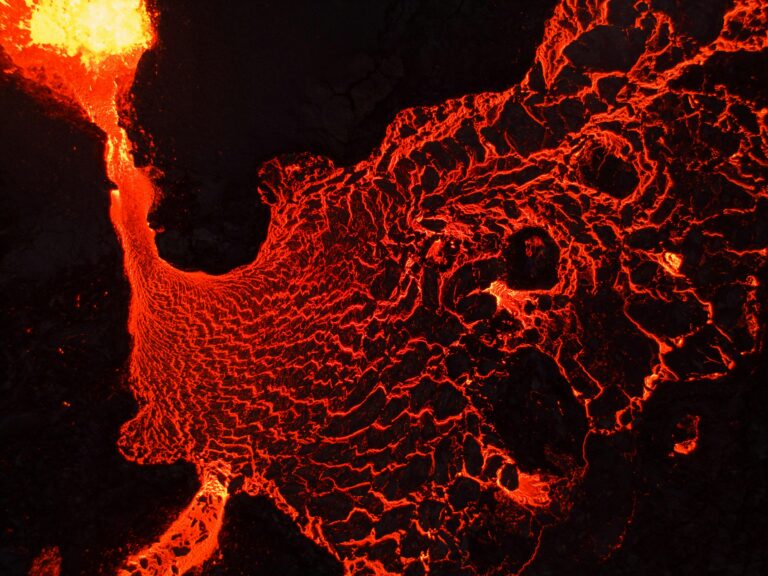
Pitta is associated with functions of transformation and regulation, and can be identified through the qualities hot, sharp, flowing/spreading, unctuous, light. In a balanced state, this functional pattern contributes to efficient metabolic activity and discernment. When Pitta becomes excessive or disturbed, it contributes to irritation, inflammation and eruptive states.
Structure (physical build)
A Pitta-dominant person typically has a medium, well-proportioned build, with a sense of balance and efficiency in their physical structure and facial features. The shoulders and hips are usually proportionate, and the body appears neither especially light nor heavy.
Body weight tends to remain relatively stable. The skin is often warm, soft and sensitive, with a tendency to flush or redden easily in response to heat, sunlight or emotion. Freckles, redness, or signs of irritation may be present. Strong circulation often gives the complexion a clear, vivid or “alive” quality.
The eyes are generally piercing and expressive, conveying an impression of sharpness and intensity. Hair is often fine and straight, sometimes oily, with shades of blond or red, and a tendency toward premature greying. Overall, the body reflects a quality of contained heat and efficient organisation rather than pronounced lightness or bulk.
Functions (physiology and psychology)
In function, Pitta expresses itself through intensity, precision and directedness rather than variability or accumulation.
Energy tends to be steady and goal-oriented. A Pitta-dominant person often moves through the day with a clear sense of purpose and prefers efficiency, continuity and completion in their activities. There is usually a strong drive to resolve tasks fully, alongside a low tolerance for delay, confusion or inefficiency.
Appetite is strong, regular and punctual. Hunger tends to arise clearly and intensely, often becoming uncomfortable if meals are delayed. Digestion is usually efficient, although it may be weakened by excess stimulants, alcohol, spicy or greasy foods, and overeating. Elimination tends to follow a regular rhythm.
Sleep is generally moderate in duration, but may become lighter or more disturbed when the mind remains engaged in work, or in the presence of ambient light.
Mentally, Pitta is sharp and analytical. Thoughts tend to move toward resolution, categorisation and decision-making rather than open-ended exploration. There is a natural capacity to evaluate situations clearly, identify what is essential, and act decisively.
Emotionally, frustration and irritation arise readily when obstacles interfere with goals, standards or expectations. These emotions often build internally before eventually being expressed more forcefully than intended.
A balanced Pitta-dominant expression
Paula begins her morning by organising her tasks, with a quiet certainty about what needs to be done. At work, she is efficient and attentive. She prefers to complete a task properly before moving on to the next one, and feels particular satisfaction when things are organised, resolved, or improved.
In conversation, she is direct and thoughtful. She listens carefully and responds with precision, often clarifying ideas in a way that helps others understand them more easily. There is a natural leadership quality in her, expressed less through dominance than through competence, reliability and clarity.
She enjoys travelling to cooler latitudes, and tends to struggle in hot and humid climates. She is curious but selective, and often engages in activities only if she finds them sufficiently challenging, or useful for her life objectives.
She quickly becomes aware when her body lacks rest or nourishment, and therefore prefers to maintain regular and structured rhythms. She tolerates periods of intense effort well, but excess heat, stimulation, or pressure disturbs her quickly.
People describe her as intelligent, driven and dependable, but also warm and genuinely invested in what she does.
A Pitta-dominant imbalance
Peter experiences his days with a constant sense of urgency. He wakes already thinking about tasks, deadlines and unresolved problems, and finds it difficult to disengage mentally from work or responsibility.
Physically, signs of excess heat have become noticeable. He sweats easily, his cheeks and nose remain persistently flushed, and he has begun experiencing headaches and occasional nosebleeds around midday. Even in winter, he prefers sleeping with the window open because he feels uncomfortably warm.
His appetite is intense, and delayed meals quickly make him irritable. His digestion has become reactive: oily foods, alcohol, stimulants or spicy meals now trigger acidity, loose stools and digestive irritation. His skin has become sensitive, with redness, rashes and inflammatory breakouts that worsen with heat or sun exposure.
Sleep is affected by persistent mental activity. Even when physically tired, his mind continues analysing conversations, decisions and unfinished work. He may struggle to fall asleep, or feel mentally active throughout the night.
Emotionally, he has hardened into criticism, impatience and outbursts of anger. He becomes frustrated when others fail to meet his standards or pace. His thinking loses flexibility, and he has become cynical and callous.
Kapha Dosha

Pitta is associated with functions of cohesion, and can be identified through the qualities cold, heavy, dull, unctuous, smooth, stable. In a balanced state, this functional pattern contributes to lubrication, growth and repair. When Kapha becomes excessive or disturbed, it contributes to congestion and inertia.
Structure (physical build)
A Kapha-dominant person typically has a solid, well-developed and often broad frame, with a natural sense of physical strength. The shoulders, hips and joints are usually strong and well-cushioned, giving the body a grounded and supported appearance. There is often a sense of density in the structure, as though the body is built for endurance and durability.
Body weight tends to be naturally higher and easier to gain than to lose. The skin is generally smooth, pale, soft and well-hydrated, often cool to the touch and slightly thick in texture. It usually ages gradually and evenly.
Facial features are rounded and harmonious, with full cheeks, calm, large eyes, and soft but well-defined contours. Hair is typically thick, strong and slightly wavy, sometimes with an oily sheen. Overall, the body expresses cohesion, stability and built-in support rather than lightness or sharpness.
Functions (physiology and psychology)
In function, Kapha expresses itself through steadiness, conservation.
Energy tends to be stable but slow to mobilise. A Kapha-dominant person may take time to fully “come online” in the morning, but once engaged can sustain effort for long periods without becoming depleted. There is usually a preference for continuity, familiarity and predictable routines rather than frequent change or stimulation.
Appetite is generally moderate and stable, sometimes relatively low in the morning. Eating may be motivated as much by comfort, habit or emotional grounding as by hunger itself. Digestion tends to be steady but slower, with a tendency toward heaviness or sluggishness when overloaded by greasier or heavier foods like dairy, cereals, meats or oils.
Sleep is usually deep, long and restorative. Falling asleep tends to come easily, although waking and becoming fully alert may take more time. In general, the nervous system is less easily destabilised by external circumstances or stimuli.
Mentally, Kapha is steady, patient and conservative. There is often a strong capacity for retention and long-term memory, especially for emotional experiences and lived associations. Learning may initially take longer, but knowledge is deeply integrated once acquired.
Emotionally, responses are stable and contained. There is often a natural calmness, patience and emotional endurance, alongside a strong tendency toward attachment — both to people and to familiar environments, habits or objects.
A balanced Kapha-dominant expression
Kelly moves through her morning slowly and deliberately. She wakes without urgency, taking time to settle into the day. Her presence feels calm and grounding, as though she naturally brings stability into the space around her.
Her organism tends to function with regularity and continuity. Energy is not fast or impulsive, but stable and well sustained over time. Once an activity is started, she is able to maintain it consistently without great energy expenditure or distractions.
She prefers to observe carefully before acting and rarely rushes decisions unnecessarily.
In conversation, she listens more than she speaks. When she responds, her words are measured, reassuring and thoughtful. There is a quiet steadiness in the way she relates to others — she may not react quickly, but she is consistently attentive and present.
She enjoys gardening, reading, fixing things, and isn’t particularly interested in travelling to other countries.
People describe her as kind, loyal and selfless. Others often turn to her when they need reassurance.
A Kapha-dominant imbalance
Kevin struggles to get moving in the morning. Even after waking, a heaviness lingers in both body and mind, as though everything is moving through thicker layers. The more he rests, the more difficult it becomes to mobilise himself into action.
His energy feels slow and resistant to activation. Tasks accumulate not because he lacks ability, but because initiating activity feels disproportionately effortful. Mentally, there is a sense of fogginess or dullness, with thoughts taking longer to form or respond.
Physically, he feels heavy and congested. Digestion has become sluggish, and he often feels overly full or bloated even after small meals. Weight has gradually increased, alongside constipation, sinus congestion and a heavy productive cough. Fluid retention has also become more noticeable.
Emotionally, he has become increasingly withdrawn and sad. He finds himself experiencing neediness, holding onto relationships or possessions even when they no longer feel healthy. Change feels difficult to initiate, and inertia gradually reinforces itself over time.
The Doshas as Patterns, Not Identities
What Ayurveda describes through the Doshas are not fixed identities or rigid personality types, but recurring patterns through which life expresses itself in the body and mind.
- Vata describes patterns of movement,
- Pitta describes patterns of transformation and regulation,
- Kapha describes patterns of cohesion and stability.
All three are present in every individual at all times. What changes is their relative prominence, the contexts in which they arise, and the degree to which they remain balanced.

If this helped you see Ayurveda’s framework in a new way, feel free to pass it on to someone who might find it useful too.
Note: comments are disabled on this blog in order to preserve a space for reading and reflection without active moderation.
I am not able to monitor or respond to public comments.
For any remarks, reflections, or exchanges, you can contact me via the contact page or by email (contact@consultationsayurveda.com).