Understanding Ayurveda: Philosophy, Status, Practice and Relevance
What Is Ayurveda and How Does It Work?
Catégories
Archives
Photo by Edz Norton on Unsplash
Contents
When “Everything Looks Fine” Doesn’t Feel Fine: A Different Perspective on Health
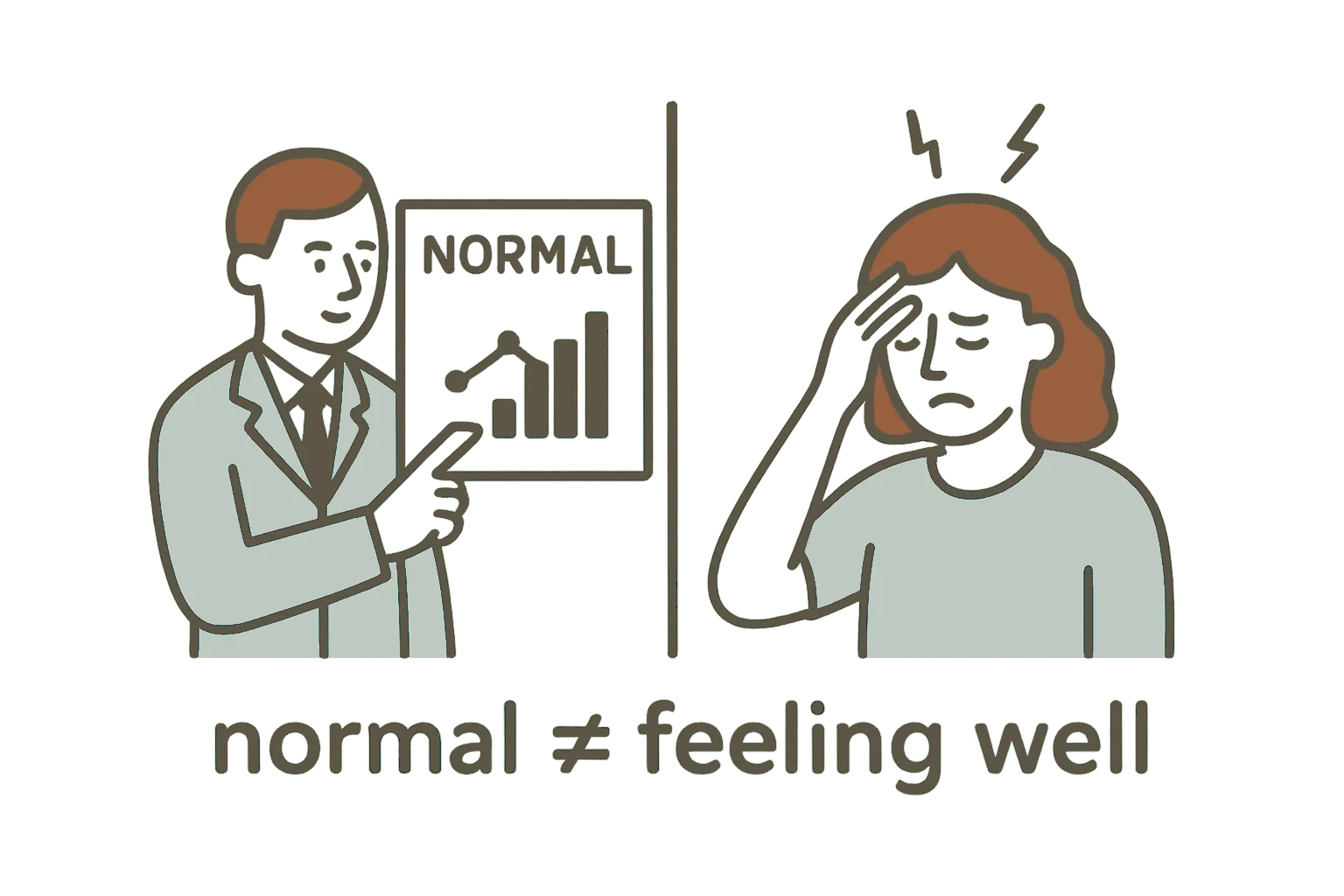
I don't feel well, but I have no "disease"
It has happened to me more than once, and I’m sure it resonates with many people: I don’t feel well, so I go to the doctor. She runs some tests and gives her verdict: “Everything looks normal.” Good news! Or perhaps not? Because I still feel unwell. Yet without a medical diagnosis, there is no treatment — only a smile and a “I’m sure it’s nothing”, or “come back if things get worse”.
You leave wondering whether it is all in your head. You hope it will pass on its own, or sometimes even that your health will deteriorate enough for someone to finally “measure” the problem and help you.
But what is "health"?
Here lies the issue. Health is far more than the absence of disease. You can feel unwell without having a diagnosable illness, and conversely, you can have a disease while still feeling relatively well.
Ayurveda doesn’t consider health and disease as an on/off switch. Rather, it considers them as points on a spectrum – we are constantly adjusting the dial to get a clear signal.
What is more, as highlighted also by The World Health Organization, health does not include only physical wellbeing. It also includes mental, social and emotional factors.

Modern medicine, focused on diagnosing and eliminating disease, has become skilled in that domain — but that same focus also makes it less suited to addressing the other dimensions of health that exist before and beyond disease itself.
This is precisely where Ayurveda offers a different perspective. It is concerned with what happens before a disease can be diagnosed, as well as with everything that continues to shape health after a diagnosis has been made. Rather than waiting until something can be measured and named, its aim is to notice which way your “dial” is moving and help nudge it back toward balance. How is that possible? Because Ayurveda relies on a different way of observing the body and describing its patterns. That is the approach I’ll explore in this article.
Wherever you are on the spectrum between health and illness, Ayurveda can help you adjust the dial.
Why a 2,000-Year-Old System Can Solve 21st-Century Problems

The inconveniences of contemporary life
We live in a time when you can track your heart rate on your wrist and receive medical advice from a search bar. So why bother with a healthcare system that is thousands of years old? Because, surprisingly, Ayurveda addresses questions that our high-tech world struggles with.
Modern life may offer convenience, but it also brings stress, burnout, a constant undercurrent of anxiety — not to mention a significant number of chronic illnesses. These are not merely inconveniences; they belong to today’s epidemics of lifestyle- and pollution-related conditions. And the reality is that most of them cannot simply be solved with a pill or surgery. They also require changes in our daily lives.
Taking all factors into account
This is exactly where Ayurveda shines. While modern medicine targets disease, this traditional system approaches wellbeing more broadly.
- It looks for the many factors that may negatively affect your physiology (physical, mental, social, or emotional)
- Once these factors are identified, it can help you make adjustments to improve your health.
- Also, it can teach you to recognise early signs of imbalance, so that you can prevent rather than cure.
In other words: Ayurveda is not about abandoning your doctor. It is about filling the gaps that modern healthcare systems often leave wide open — helping you feel balanced, resilient and genuinely healthy.
This doesn’t mean that the individual has agency over all factors influencing their health. Many of these factors depend on our environment, work conditions, or social organisation. If a consultation can help address some of these, others may depend on collective and public health choices. In this sense, Ayuveda can also offer a new angle to assess which social arrangements support – or hinder – public health.
Here is why Ayurveda is especially relevant in Europe today:
- Stress and burnout: When your brain feels like it has 59 browser tabs open, Ayurveda offers simple daily practices to calm the noise.
- Gut health: Long before “probiotics” became a buzzword, Ayurveda already viewed digestion as the foundation of wellbeing.
- Prevention rather than crisis management: While modern medicine often intervenes after things go wrong, Ayurveda aims to stop you falling off the cliff in the first place.
- Mind-body connection: Ayurveda never separated mental and physical health — something modern science is only now beginning to fully acknowledge.
- Personalisation: Forget one-size-fits-all advice. Ayurveda adapts its recommendations to you — not to a “standard person” who does not exist.
From Ancient Roots...
Its origins
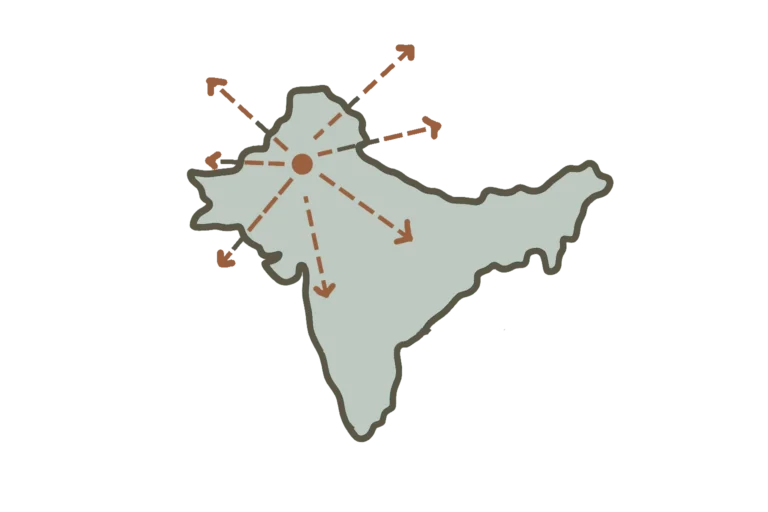
Ayurveda (“knowledge of life” in Sanskrit) is a system of health that emerged in South Asia more than two millennia ago. As with many ancient bodies of knowledge, its exact origins are uncertain and likely predate the earliest surviving texts. Along the way, Ayurveda exchanged ideas with other great medical traditions of the ancient world, including the Chinese, Tibetan, and Greek traditions.
In reality, there is nothing particularly remarkable about its age. For thousands of years, humans have developed remarkably sophisticated bodies of knowledge through the systematic observation of the living world. Long before the advent of modern laboratories, they learned to cultivate plants, produce metal alloys, make ceramics, navigate the oceans, and much more. Even today, many forms of expertise are grounded in sustained observation and deep familiarity with living environments, materials, and practices.
A "science of the concrete"
It was precisely this kind of knowledge that the anthropologist Claude Lévi-Strauss regarded as a genuine form of science, which he called the “science of the concrete.” In The Savage Mind, he writes that “there are two distinct modes of scientific thought, … two strategic levels at which nature lends itself to scientific inquiry.” One remains close to sensory perception; the other operates at a greater remove from it.
This distinction proposed by Lévi-Strauss provides a useful framework for understanding Ayurveda. Indeed, Ayurveda:
- relies on direct observation and lived experience;
- describes phenomena in terms of qualities that can be perceived by the senses, rather than through instrumental measurements;
- understands its objects not as isolated entities, but as elements within a network of relationships and interactions;
- and develops its theoretical concepts from both philosophical traditions and recurring patterns observed in the living world.
In this sense, Ayurveda can be understood as an example of what Lévi-Strauss called a “science of the concrete.”
Ayurveda is not a modern science ahead of its time. It is a different, yet coherent and systematic, way of observing and understanding the living world.
... To worldwide recognition
A living tradition
Today, Ayurveda is practised in countries such as India, Nepal, Sri Lanka, and Bangladesh as part of an unbroken living tradition. In these countries, it is taught in universities and practised in specialised hospitals, where licensed physicians provide both preventive and therapeutic care. This includes intensive treatment procedures known as Panchakarma, which aim to restore the patient’s physiological balance.
Over time, Ayurveda has also travelled beyond its places of origin. From Brazil to Australia, from South Africa to the Middle East, and throughout North America and Europe, it has become an international tradition. It is also recognised by the World Health Organization as a “traditional complementary medicine”.
What place in Europe?
In Europe, however, the recognition of Ayurveda varies from country to country (and may change over time). Depending on where you live, Ayurveda may come in the form of a medical prescription—or simply a wellness brochure.
European countries and legal status of Ayurveda
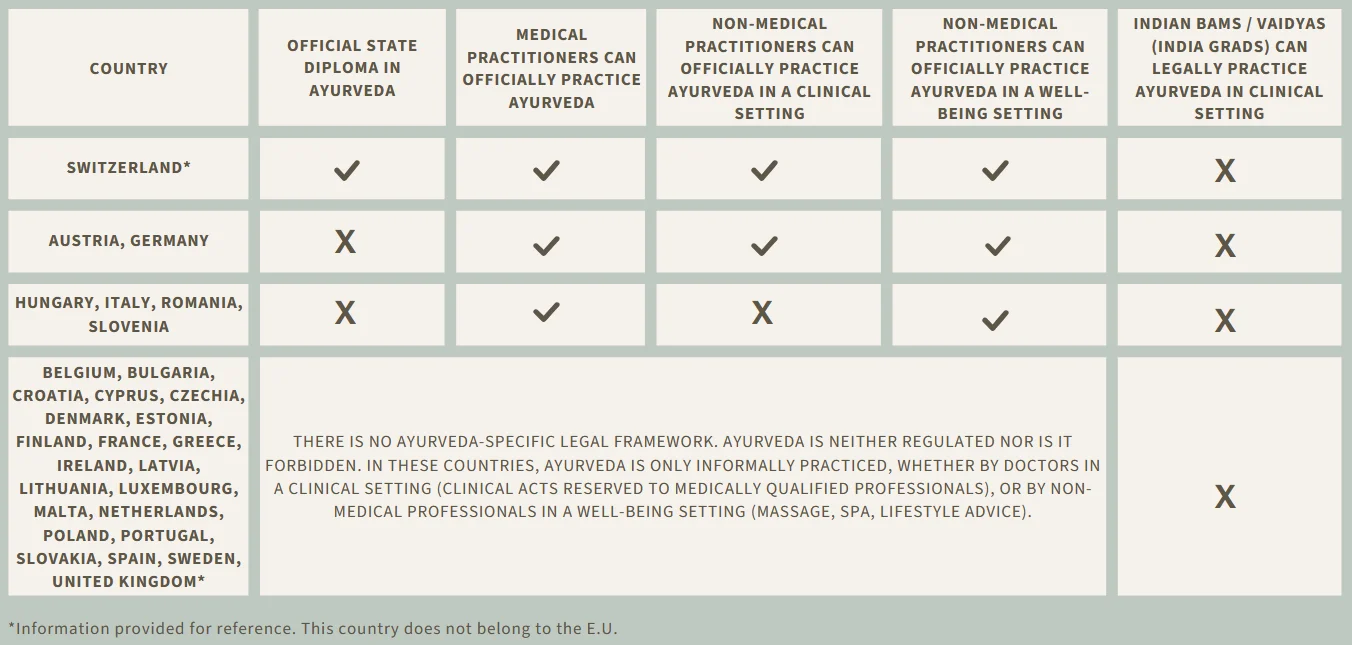
A common distinction is made between “medical” and “non-medical” Ayurvedic practices. Clinical acts include internal procedures — such as enemas, purgation or therapeutic vomiting — as well as the prescription of herbs or preparations intended to treat diseases as defined by modern medicine.
Non-clinical practices, on the other hand, include external therapies such as massage and body treatments, as well as general lifestyle or dietary guidance aimed at supporting health. Within the European Union, clinical acts are generally restricted to qualified healthcare professionals, whereas non-clinical practices can usually be offered within wellness settings.
Ayurveda is now a global medical tradition, but its legal status depends on the regulatory framework of each country.
How Ayurveda Works: The Art of Balance
Balance rather than disease
The global recognition of Ayurveda highlights its credibility and adaptability, but formal recognition tells only part of the story. Its true essence does not lie in regulations or institutions, but in the principles that guide individual health and wellbeing. Across cultures and continents, practitioners and clients operate within the same framework.
At the heart of Ayurveda lies a simple idea: balance matters. Life itself depends on it. Ayurveda is therefore concerned with the constant interplay of forces around us, much like the tides rising and falling under the pull of gravity.
And we humans? We are part of that dance. Our bodies and minds are continuously shaped by the world around us. It is hardly surprising that your mood lifts on a sunny day and darkens beneath grey skies.

Ayurveda as an antidote to modern disconnection
Modern society often pushes us to live as though we were separate from our environment: travelling from one climate to another within hours, eating foods from all over the world in every season, living under artificial light, ignoring natural sleep rhythms, or reducing nutrition to a simple calorie calculation.
Ayurveda reminds us of a simple yet profound idea: we are animals who are part of a larger living system. Our bodies constantly respond to the climate, the seasons, our habits, emotions, and relationships. Health, therefore, is not an isolated state to “optimise”, but a dynamic balance between ourselves and the world around us.
A Medicine of Interactions
Every interaction we have — what we eat, the thoughts we dwell upon, the lights and sounds we absorb, the rhythm of our daily life — can move us towards balance or away from it.
And since literally everything around us affects our balance, then literally anything can become medicine or poison. A morning cup of coffee may provide the perfect boost one day, yet leave you jittery and anxious the next, depending on your state at the time. Ayurveda studies this intricate web of interactions and draws from nature’s toolbox to help guide body and mind back towards harmony.
A qualitative language
How does it do this?
Because it developed long before the advent of modern measuring instruments, Ayurveda describes the world in terms of what can be directly observed and experienced. It does not merely measure—it characterises. Foods, climates, activities, and bodily states are described according to their perceptible qualities: hot or cold, dry or moist, heavy or light, stable or mobile.
From an Ayurvedic perspective, a red chilli pepper is not simply “50 calories.” The moment you put it in your mouth, it burns and generates warmth; eaten in larger quantities, it can make you sweat, increase circulation, and sometimes even promote bleeding. It is from these directly observable effects that Ayurveda describes it as “hot” and “sharp.” These qualities summarise the way it acts on the body.
This is where things become particularly interesting. Ayurveda can predict how your physiology is likely to respond to that chilli based on your current state—your present “dominant qualities.” Are you feeling cold, sluggish, or a little low? The chilli may help by adding warmth and stimulating your metabolism. Are you feeling irritable, overheated, or restless? That very same chilli would simply “add fire to fire.”
A coherent model of the living world
Behind this seemingly intuitive approach lies a vast and sophisticated theoretical framework. Ayurvedic practitioners rely on an entire system of concepts and classifications — including the well-known Doshas — to analyse imbalances and guide their recommendations.
This article does not go into those details, but it is useful to understand that Ayurveda is not based solely on wellness intuitions: it offers a genuine framework for understanding the body, the mind, and their relationship with the environment.
What makes this approach much more than folklore is its method. Ayurvedic models were developed through the systematic observation of living systems and refined through clinical practice.
In short, Ayurveda is a universal framework applied to the individual. There are no foods or activities that are inherently “good” or “bad.” What matters is how they interact with your body and mind to move the balance toward health—or away from it—at any given moment.
There is, for example, no nutritional standard that is entirely independent of context. Any claim that “this is the best diet” implicitly assumes an average body living in an average, fixed environment. While this may be a useful abstraction, its limitations quickly become apparent when we consider a real person living in a specific, ever-changing context.
Two Observation Scales
Ayurveda therefore offers a coherent way of understanding and predicting phenomena at a particular level of description. It is grounded in a cosmological model that explains the emergence of the universe and of life—a broad theory of correspondences between the cosmos and the human being.
Within this worldview, Ayurveda approaches health holistically, as the dynamic harmony of the individual across physical, mental, social, and spiritual dimensions. As such, it is not concerned with molecular mechanisms or the biochemical reasons why a particular treatment works. Instead, it provides an effective framework for understanding health when many interacting factors are involved.
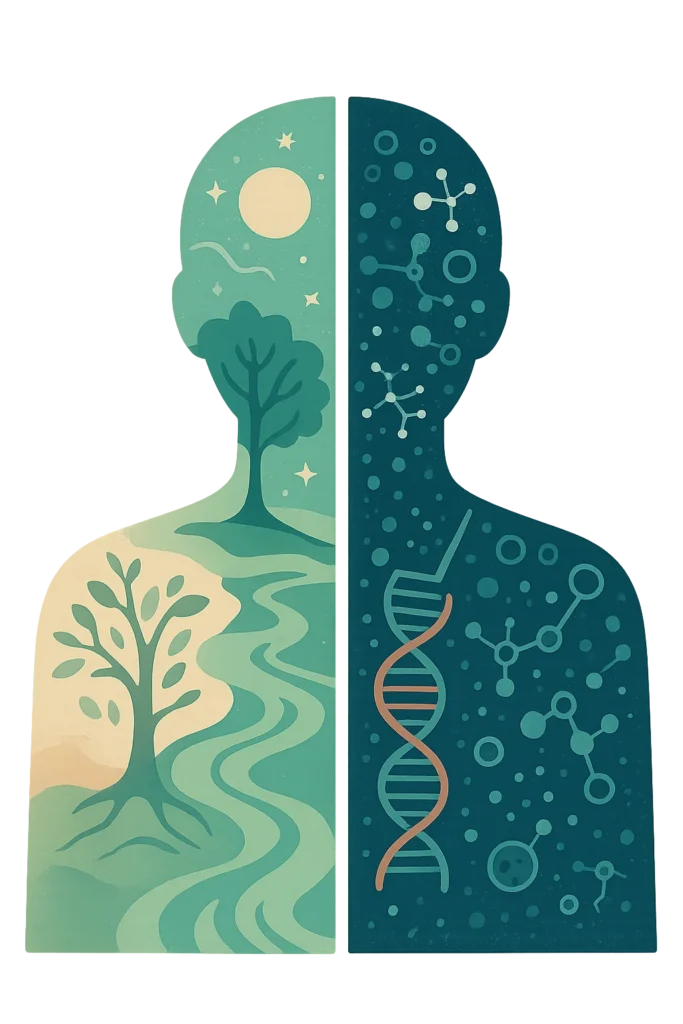
Modern medicine, by contrast, often operates at a microscopic level and within the physical dimension. It can explain what happens on the molecular scale and possesses powerful tools for targeted and quick interventions. Yet this speed and precision often come at a cost: the systemic causes of disease, along with the broader effects of treatment — on digestion, immunity or general balance — are, within this framework, more difficult to account for, predict or manage.
Far from opposing one another, these two approaches simply offer different readings of health and physiology; each speaks its own language and possesses its own strengths and limitations. Ayurveda reminds us of the broader patterns connecting body, mind and environment, while modern medicine illuminates the subtle mechanisms supporting them.
A Note on Spirituality and Ayurveda
The Role of Spirituality in Ayurveda
Ayurveda approaches the personal, everyday experience of health in a deeply holistic way. This perspective helps explain why some Ayurvedic clinics incorporate spiritual practices: spirituality can provide an additional means of cultivating balance by aligning one’s way of life with deeper values.
Indeed, the classical texts of Ayurveda recognize that spiritual and faith-based practices can promote healing, and regard them as a distinct category of treatment in their own right. But this raises an important question: whose spirituality are we talking about?
The Vedic tradition
Like many ancient sciences, Ayurveda developed within a rich cultural and spiritual context: the Vedic tradition. That tradition remains alive in South Asia, where some practitioners incorporate Vedic mantras or rituals into their treatments. Within that cultural setting, such practices can carry profound meaning.
When these practices are transplanted into a different cultural context without adaptation, however, their significance is less obvious. For people who do not identify with the Vedic tradition, they may be experienced as gestures disconnected from the therapeutic process, or even as the unexpected introduction of a religious dimension into a healthcare consultation. In such cases, they do not necessarily contribute to the therapeutic outcome.
The Absence of Dogma
At its core, Ayurveda is a pragmatic discipline. Nowhere do its classical texts require patients to follow a particular spiritual path or adhere to a specific religion. Ayurveda’s primary concern is to restore and maintain each person’s mental, physical, and emotional balance. Therapeutic tools—including spiritual ones—are chosen according to their relevance and effectiveness, rather than out of allegiance to any doctrine.
From this perspective, spirituality may form part of Ayurvedic care, but it can take many different forms. An Ayurvedic practitioner may draw upon whatever spiritual or philosophical resources are meaningful to a particular client, provided they support that person’s health and well-being.
A tradition based on lived experience
The Body as the First Laboratory
One of Ayurveda’s most remarkable features is that you do not need a doctorate—or a decoder ring—to understand it or begin putting it into practice. Of course, the system quickly becomes complex, and the guidance of a qualified practitioner remains invaluable. But its core concepts do not depend on knowledge reserved for specialists. They begin with a skill that we all possess: the ability to observe our own experience.
This accessibility is no accident. It follows directly from the way Ayurveda builds knowledge. As a science of the concrete, it describes the world in terms of qualities that can be directly perceived. Its first laboratory is the body we live in.
Modern medicine, by contrast, relies heavily on measurement: blood tests, heart rate, calorie counts, wearable sensors. These tools are immensely valuable and have transformed our ability to diagnose and treat disease. But as media theorist Douglas Rushkoff has pointed out, when everything must be measured, we inevitably lose touch with the somatic dimension of what we are measuring.
Before the body is an object of measurement, it is an experience.
Learning to Read Qualities
Numbers cannot tell us what hunger feels like, or why one meal leaves us feeling heavy while another leaves us feeling light. Yet we are often tempted to choose our food by calorie count, as though life were a spreadsheet.
Ayurveda helps us reconnect with our own sensations, restoring them to their rightful place as valuable sources of information.

Take cheese, for example. We can observe that it is dense, sticky, and cool to the touch. From these directly perceptible qualities, Ayurveda anticipates that, when eaten in excess or under unfavourable conditions, it will tend to slow digestion and produce a feeling of heaviness.
Modern science would describe many of the same effects differently: a high fat and calcium content, slower gastric emptying, hormonal and metabolic interactions.
In many cases, then, the two approaches describe comparable phenomena, but at different levels of observation. Where contemporary science relies on quantitative measurements and biochemical mechanisms, Ayurveda relies on perceptible qualities and direct experience.
For clients, this language is often far more approachable. Once we learn to recognise these qualities, recurring patterns begin to emerge naturally. We may notice, for example, that foods which are cold, dense, and sticky—such as ice cream or refined grains—tend to slow digestion. By contrast, foods that are light and warming—such as ginger soup—tend to have the opposite effect. Gradually, the world becomes legible in a new way.
Autonomy Through Observation
This way of approaching health has an important consequence: it makes part of Ayurvedic knowledge directly accessible to the people who experience it.
The goal is not to replace scientific knowledge, nor to do away with practitioners. Rather, it is to cultivate the capacity for observation that allows us to better understand how our own bodies behaves, and to respond with discernment.
As the weather grows warmer, for instance, someone may notice that they become more prone to irritability or heat-related skin eruptions. By learning to recognise these as different expressions of the same underlying imbalance, they can naturally adapt their diet, favour more cooling foods, avoid strenuous activity during the hottest part of the day, or adjust their daily routine.
What once seemed like a series of unrelated discomforts becomes a coherent stream of information from the body—information to which the person can meaningfully respond.
This level of understanding is not a promise to cure disease. Rather, it cultivates awareness and autonomy. It teaches us to become more attentive observers of our own balance, so that even the ordinary choices of daily life can contribute to maintaining health.
The goal is not to replace the practitioner, but to help the client become a skilled observer of their own health.
Knowledge That Can Be Shared
Because Ayurveda is grounded in directly observable phenomena, much of its knowledge can be shared with remarkable ease. The qualities it employs—hot, cold, heavy, light, dry, unctuous—require neither laboratories nor sophisticated technology to learn. They can gradually be recognised by anyone through direct experience.
This accessibility has implications that extend well beyond clinical practice. It can profoundly change the relationship between the client and Ayurvedic knowledge.
In a model where understanding depends primarily on measurements, laboratory analyses, or highly specialised expertise, patients rely on institutions and experts to interpret their condition.
In the Ayurvedic approach, part of that interpretive capacity can be reclaimed. The client becomes an active participant in their own journey toward health.
The practitioner continues to play an essential role as a guide, but one who transmits knowledge and a way of observing, rather than simply a set of prescriptions to be followed passively.
Observing is one thing. Interpreting is another.
Ayurveda: More Than a Collection of Practices
Ayurveda’s emphasis on self-observation might suggest that it is simply a collection of straightforward practices.
On the contrary, what distinguishes Ayurveda from a mere set of practices is that it rests upon a coherent theoretical framework. This framework enables it to connect observations, interpret them, guide a client’s journey towards health, and select the tools and techniques that are most appropriate to a given context.
From this perspective, two clients presenting with similar symptoms will not necessarily receive the same recommendations. Conversely, very different manifestations may be understood as expressions of the same underlying imbalance. The aim is not to focus on an isolated symptom, but to understand the dynamic that gives rise to it.
The Role of the Practitioner
This way of reasoning requires years of learning. A practitioner’s expertise lies not only in the accumulation of knowledge, but also in the ability to recognise patterns, prioritise relevant information, and integrate multiple observations into a coherent interpretation.
The autonomy of the client and the expertise of the practitioner are therefore not in opposition; they complement one another. The former gradually learns to perceive the workings of their own body and mind more clearly, while the latter provides the conceptual framework needed to interpret those observations as a whole.
Ayurveda is therefore neither a technique nor simply a wellness practice. It is a complete system, with its own way of describing the human organism and health.
Some Reasons Why Ayurveda Stands Out in Today’s Wellness Landscape
- Holistic and integrative: Ayurveda considers the interaction between body, mind, and environment. All three are part of the same analysis.
- Personalised approach: You are not treated as a “generic patient”. Your constitution, current condition, and lifestyle guide recommendations.
- Everyday empowerment: Ayurveda helps you develop healthy daily habits and become your own health detective.
- Rooted in prevention: Rather than waiting for illness to appear, Ayurveda emphasises preventive care — helping maintain balance and vitality over time.
- Deep yet accessible: The system can be as sophisticated or as practical as you want it to be. Practitioners can guide you, but many small lifestyle adjustments are easy to apply independently.
Ayurveda: What Is It, Really?
Ayurveda is neither a magic pill nor a secret society. It is an ancient system that helps you understand your body, your mind, and your environment. In doing so, it provides a framework for using a wide range of tools—including nutrition, physical activity, traditional herbs, and more—in a coherent and personalised way.
Like any living tradition, Ayurveda is practised in many different ways today, depending on the context, the school of thought, and the practitioner. Some approaches are strongly clinical, while others place greater emphasis on spiritual or contemplative dimensions.
This article has deliberately taken a simple and pragmatic approach. Simple does not mean superficial. Ayurveda can profoundly influence both our health and the way we live, precisely because it teaches us to cultivate a finer awareness of ourselves, our environment, and the ways in which the two interact.
Whether you explore it on your own or with the guidance of a practitioner, Ayurveda gradually invites you to become an active participant in your own health. The practitioner’s role is to guide this process, not to ask you to place your well-being in the hands of an external authority. Rather, the aim is to help you recognise your own patterns, needs, and imbalances.
In this sense, Ayurveda reminds us that health is not simply something we are given—it is something in which we actively participate. Whether approached as a clinical system or as a framework for observing everyday life, its intention remains the same: to help each of us live in closer dialogue with our own nature and with the world that shapes it.

If this text resonates or feels helpful, you’re welcome to pass it on to anyone who might find it meaningful.
Further Reading and References
If you would like to explore Ayurveda beyond this introduction, here are some reliable and accessible resources covering traditional texts, modern research, and health institutions. You can also continue this reading with an article that focusses more closely on the concept of the Doshas.
Official and institutional resources
- Organisation mondiale de la santé (OMS) : Rapport mondial sur la médecine traditionnelle et complémentaire (2019) – fournit un aperçu de la manière dont l’Ayurveda et d’autres systèmes sont intégrés dans le monde.
- Ministère de l’AYUSH (Gouvernement de l’Inde) : Organisme officiel supervisant l’éducation, la recherche et les normes pour l’Ayurveda, le Yoga, l’Unani, le Siddha et l’Homéopathie.
- Conseil central pour la recherche en sciences ayurvédiques (CCRAS) : Publie des recherches sur la pharmacologie ayurvédique, le panchakarma et les études cliniques.
Academic references and introductory books
- Hankey, A. (2005). “The scientific basis of Ayurveda.” Current Science, 88(10), 1469–1477.
- Patwardhan, B. (2014). “Bridging Ayurveda and Modern Medicine.” Journal of Ayurveda and Integrative Medicine, 5(4), 241–245.
- Charaka, Charaka Samhita, edited by Dr. P.V. Sharma, 1st English edition, Chowkhamba Sanskrit Series Office, Varanasi, 1996.
- Sebastian Pole – Ayurveda: Ancient Wisdom for Modern Wellbeing
Other online resources
- to-ayurveda.ch – Organisation professionnelle de l’Ayurveda, Suisse
- jaim.in – Journal of Ayurveda and Integrative Medicine
- nccih.nih.gov – Centre national américain pour la santé complémentaire et intégrative (section Ayurveda)
Note: comments are disabled on this blog in order to preserve a space for reading and reflection without active moderation.
I am not able to monitor or respond to public comments.
For any remarks, reflections, or exchanges, you can contact me via the contact page or by email (contact@consultationsayurveda.com).